Why Choose Korea for ICL Surgery?
at B&VIIT Eye Center Gangnam, Seoul
Korea is a popular destination for ICL surgery because international patients can access comprehensive diagnostic testing, modern ophthalmic technology, individualized lens calculations, and structured postoperative care. Seoul’s Gangnam district offers convenient access to specialized eye centers, accommodations, transportation, and multilingual services. At B&VIIT Eye Center Gangnam, patients can be evaluated for ICL, EVO ICL, and alternative vision correction procedures based on their prescription and eye anatomy.
Why Do International Patients Choose Korea for ICL?
International patients often consider Korea for ICL surgery because of its established medical infrastructure and experience with advanced vision correction procedures.
Reasons patients may choose Korea include:
- Comprehensive preoperative eye examinations
- Access to modern diagnostic equipment
- Individualized ICL power and size calculations
- Experience with moderate and high myopia
- Toric ICL options for eligible astigmatism patients
- Comparison with LASIK, LASEK, and SMILE
- Organized postoperative monitoring
- Convenient medical travel services in Seoul
- Easy access to accommodations and public transportation
- Potential cost advantages compared with some countries
The quality, price, and services included can differ between eye centers. Patients should compare the complete treatment process rather than choosing based only on the advertised price.
Advanced ICL Examinations in Korea
Successful ICL planning requires more than a standard vision test. The ophthalmologist must evaluate whether there is sufficient internal eye space and whether the eye is healthy enough for lens implantation.
Testing at B&VIIT Eye Center Gangnam may include:
- Visual acuity testing
- Current prescription measurement
- Corneal thickness and topography
- Anterior chamber depth measurement
- Endothelial cell count
- Eye-pressure testing
- Pupil size measurement
- Natural lens assessment
- Dilated retinal examination
- Dry-eye evaluation
- Astigmatism measurement
- ICL lens power and size calculation
These results help determine whether ICL is suitable and which lens configuration may be required.
ICL Surgery for High Myopia in Korea
ICL is commonly considered by patients with moderate or high myopia, particularly when their prescription may be outside the preferred range for laser vision correction.
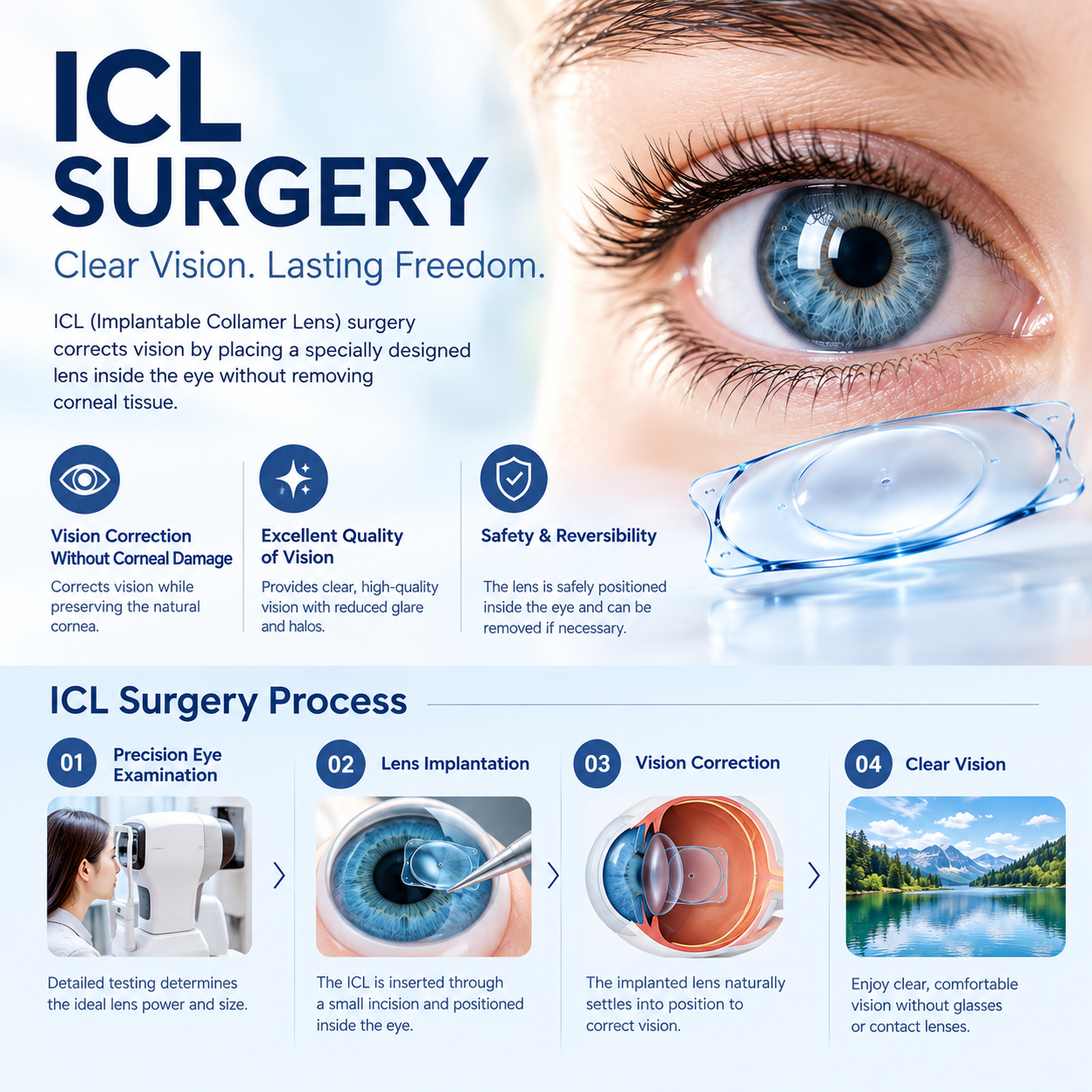
Unlike LASIK, LASEK, and SMILE, ICL does not remove corneal tissue. The implantable lens is placed behind the iris while the eye’s natural lens remains intact.
High-myopia patients still require careful retinal examinations because ICL corrects refractive error but does not remove the retinal risks associated with severe myopia.
ICL for Patients With Thin Corneas
Patients with thin corneas may have limited eligibility for procedures that correct vision by removing corneal tissue.
ICL may provide an alternative because it does not reshape the cornea. However, thin corneas alone do not confirm candidacy. The ophthalmologist must also examine the internal eye structure, endothelial cell density, eye pressure, retina, and natural lens.
ICL for Patients With Dry-Eye Concerns
Some patients explore ICL because they have dry-eye symptoms or concerns about how corneal laser surgery may affect their eyes.
ICL does not require extensive corneal reshaping, but temporary dryness or irritation can still occur after surgery. Existing dry-eye disease should be evaluated and treated when necessary.
Access to EVO ICL in Seoul
EVO ICL is an implantable lens with a central opening designed to support the natural circulation of fluid inside the eye.
EVO ICL may be available for eligible patients with myopia, while toric models may be considered when myopia is combined with astigmatism. Availability depends on prescription, eye measurements, lens specifications, and medical approval.
Patients should confirm lens availability and preparation time before finalizing their travel schedule.
Personalized ICL Lens Selection
ICL surgery requires a lens selected for the individual eye. The ophthalmologist calculates the appropriate corrective power and evaluates the lens size based on detailed anatomical measurements.
The planning process may consider:
- Degree of myopia
- Degree and axis of astigmatism
- Internal eye dimensions
- Anterior chamber depth
- Corneal diameter
- Endothelial cell density
- Pupil size
- Natural lens condition
- Lifestyle and visual goals
Accurate testing is essential because an incorrectly sized or positioned lens may affect visual quality, eye pressure, or nearby eye structures.
ICL, LASIK, LASEK, and SMILE in One Consultation
One benefit of visiting a comprehensive eye center in Korea is the ability to compare several vision correction methods after diagnostic testing.
ICL may be considered when:
- The prescription is relatively high
- The cornea is thin
- Preserving corneal tissue is preferred
- Dry-eye concerns affect laser surgery eligibility
- The internal eye anatomy is suitable for lens implantation
LASIK, LASEK, or SMILE may be more appropriate for other patients. The recommended procedure should be based on examination results rather than choosing a treatment before testing.
Potential ICL Cost Advantages in Korea
The cost of ICL surgery in Korea may be competitive compared with prices in the United States, Canada, Australia, Singapore, and certain other countries.
The final price may depend on:
- Standard or toric ICL
- Treatment of one or both eyes
- Prescription complexity
- Diagnostic examinations
- Surgeon and eye center
- Medication
- Postoperative appointments
- Interpretation or international patient services
Patients should ask whether the quotation includes preoperative testing, the lenses, surgery, medication, and follow-up care.
Travel, accommodation, meals, and transportation should also be included when comparing the total cost.
Why Choose Gangnam for ICL Surgery?
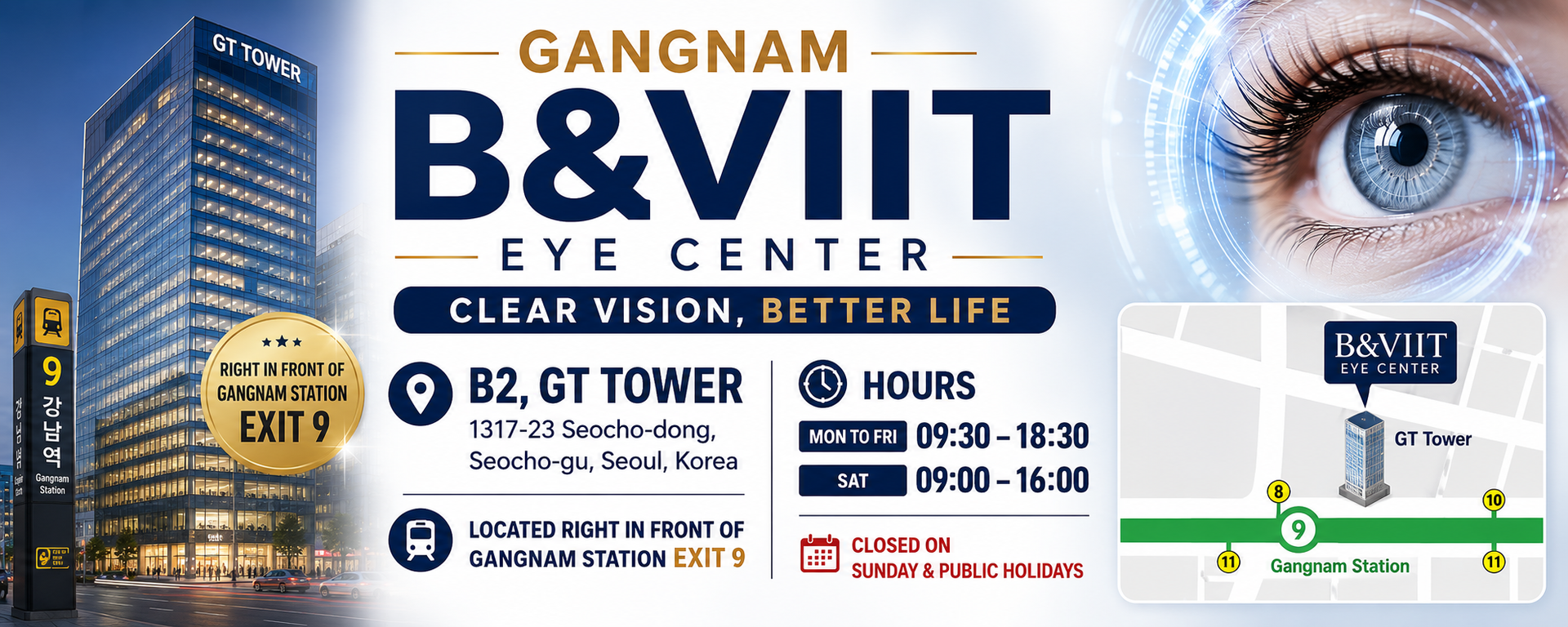
Gangnam is one of Seoul’s main medical and commercial districts. It has an extensive public transportation network and a wide selection of hotels, serviced residences, restaurants, pharmacies, and medical facilities.
International patients undergoing ICL surgery in Gangnam may benefit from:
- Convenient access to specialized eye care
- Multiple accommodation options
- Subway and taxi accessibility
- Nearby pharmacies and medical facilities
- Easy access from other areas of Seoul
- A practical environment for postoperative recovery
Patients should choose accommodation that allows convenient travel to required follow-up examinations.
ICL Surgery Process for International Patients
The international patient process generally includes:
1. Preliminary Inquiry
Patients may submit their current prescription, contact-lens information, previous eye examination results, medical history, and preferred travel dates.
This information can support preliminary guidance but cannot confirm ICL eligibility.
2. Comprehensive Examination in Gangnam
Detailed testing is performed after arrival in Seoul. Contact lenses may need to be discontinued before the examination because they can temporarily affect eye measurements.
3. Consultation and Lens Planning
The ophthalmologist reviews the results, explains treatment options, and determines whether ICL is appropriate. Lens power, size, and toric correction are planned when applicable.
4. ICL Surgery
The lens is inserted through a small corneal incision and positioned behind the iris. The natural lens and corneal tissue are preserved.
5. Postoperative Monitoring
Vision, eye pressure, inflammation, and lens position are checked after surgery. Patients receive eye drops and detailed aftercare instructions.
6. Clearance Before Returning Home
International patients should complete the recommended follow-up examinations and receive medical guidance before flying.
How Long Should I Stay in Korea for ICL?
The recommended stay varies according to examination results, lens availability, the surgical schedule, and postoperative recovery.
Patients should allow time for:
- Contact-lens discontinuation
- Comprehensive testing
- Lens confirmation
- Surgery
- Early postoperative checks
- Recovery monitoring
- Clearance before departure
Patients should confirm their personalized schedule with B&VIIT Eye Center before purchasing non-refundable flights.
Is ICL Surgery in Korea Safe?
Safety depends on appropriate patient selection, accurate lens planning, surgical care, infection-control protocols, and postoperative monitoring.
ICL is surgery inside the eye and may involve risks such as:
- Infection
- Inflammation
- Increased eye pressure
- Incorrect lens position or size
- Toric lens rotation
- Residual refractive error
- Endothelial cell loss
- Cataract formation
- Retinal complications
- Additional surgery
Choosing treatment in Korea does not eliminate these risks. Patients should receive a complete explanation of the potential benefits, limitations, and alternatives before proceeding.
Postoperative Care in Seoul
After ICL surgery, patients may be prescribed antibiotic, anti-inflammatory, and lubricating eye drops.
Patients should generally:
- Avoid rubbing or pressing the eyes
- Use medications exactly as instructed
- Keep water and makeup away from the eyes initially
- Avoid swimming and saunas
- Limit strenuous exercise
- Avoid driving until medically approved
- Attend every scheduled follow-up examination
- Report unusual symptoms immediately
The ophthalmologist will provide instructions based on the individual recovery process.
Planning Flights and Accommodation
International patients should avoid planning their departure immediately after surgery. Follow-up examinations are important for checking eye pressure, visual recovery, inflammation, and lens position.
When planning treatment in Gangnam:
- Choose flexible travel dates when possible
- Confirm lens availability before booking
- Stay near the eye center
- Arrange transportation after surgery
- Avoid driving on the procedure day
- Bring prescription and medical records
- Prepare sunglasses and prescribed medication
- Keep follow-up time available before departure
Continuing Eye Care After Returning Home
ICL patients require ongoing eye examinations even after the initial recovery period.
Long-term monitoring may include:
- Vision and prescription checks
- Eye-pressure measurement
- Endothelial cell evaluation
- Natural lens examination
- ICL position assessment
- Retinal examinations
- Monitoring for cataracts and age-related changes
International patients should ask for medical records and postoperative guidance that can be shared with an ophthalmologist in their home country.
Why Choose B&VIIT Eye Center Gangnam?
B&VIIT Eye Center Gangnam provides a structured vision correction process for international patients considering ICL surgery in Seoul.
Care may include:
- Comprehensive ICL candidacy testing
- Evaluation for moderate and high myopia
- Personalized lens calculations
- Toric ICL assessment for astigmatism
- Comparison with laser vision correction
- Postoperative eye-pressure monitoring
- Lens position and recovery checks
- International travel and aftercare guidance
Book an ICL Consultation in Korea
Patients interested in ICL surgery in Korea should begin by sharing their prescription history, contact-lens use, previous eye procedures, medical conditions, and preferred travel schedule.
Final candidacy and lens selection can only be determined after a comprehensive examination at B&VIIT Eye Center Gangnam.
Frequently Asked Questions
Why is Korea popular for ICL surgery?
Korea offers access to comprehensive eye examinations, modern diagnostic technology, experienced vision correction centers, and organized postoperative care. Seoul is also convenient for international medical travelers.
Is ICL surgery cheaper in Korea?
ICL surgery in Korea may cost less than treatment in some countries, but prices vary. Patients should compare the complete cost of surgery, testing, medication, follow-up, travel, and accommodation.
Can foreigners get ICL surgery in Seoul?
Yes. International patients can receive ICL candidacy testing, surgery, and postoperative care in Seoul. A sufficient stay in Korea is necessary for examinations and follow-up.
Why choose Gangnam for ICL surgery?
Gangnam offers specialized eye centers, convenient transportation, numerous accommodation options, pharmacies, restaurants, and services for international visitors.
Can I get EVO ICL in Korea?
EVO ICL may be available for eligible patients. Availability depends on prescription, eye anatomy, lens specifications, and the individual treatment plan.
Can my ICL eligibility be confirmed before traveling?
Medical records may support a preliminary review, but final candidacy requires comprehensive in-person eye testing.
How long should I remain in Korea after ICL surgery?
The required stay depends on testing, lens availability, scheduling, and recovery. Patients should confirm their personalized timeline before booking flights.
Will I need follow-up care after leaving Korea?
Yes. Long-term eye examinations remain important for monitoring vision, eye pressure, endothelial cells, the natural lens, retina, and ICL position.