ICL vs LASIK and LASEK in Gangnam, Seoul
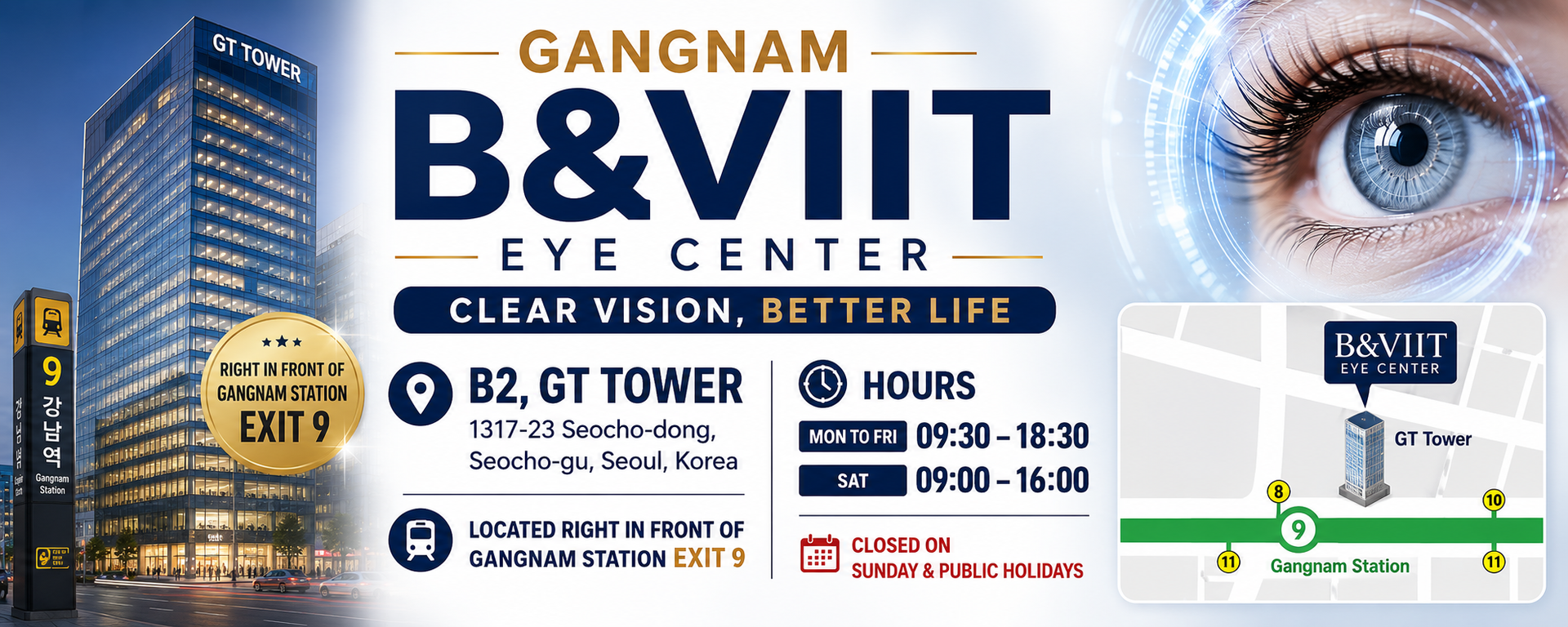
at B&VIIT Eye Center Gangnam
ICL, LASIK, and LASEK can all reduce dependence on glasses or contact lenses, but they correct vision in different ways. ICL places a corrective lens inside the eye without removing corneal tissue, while LASIK and LASEK reshape the cornea with a laser. The best option depends on prescription strength, corneal thickness, dry-eye condition, eye anatomy, lifestyle, recovery needs, and individual risk factors.
What Is the Main Difference Between ICL, LASIK, and LASEK?
The primary difference is where and how vision correction occurs.
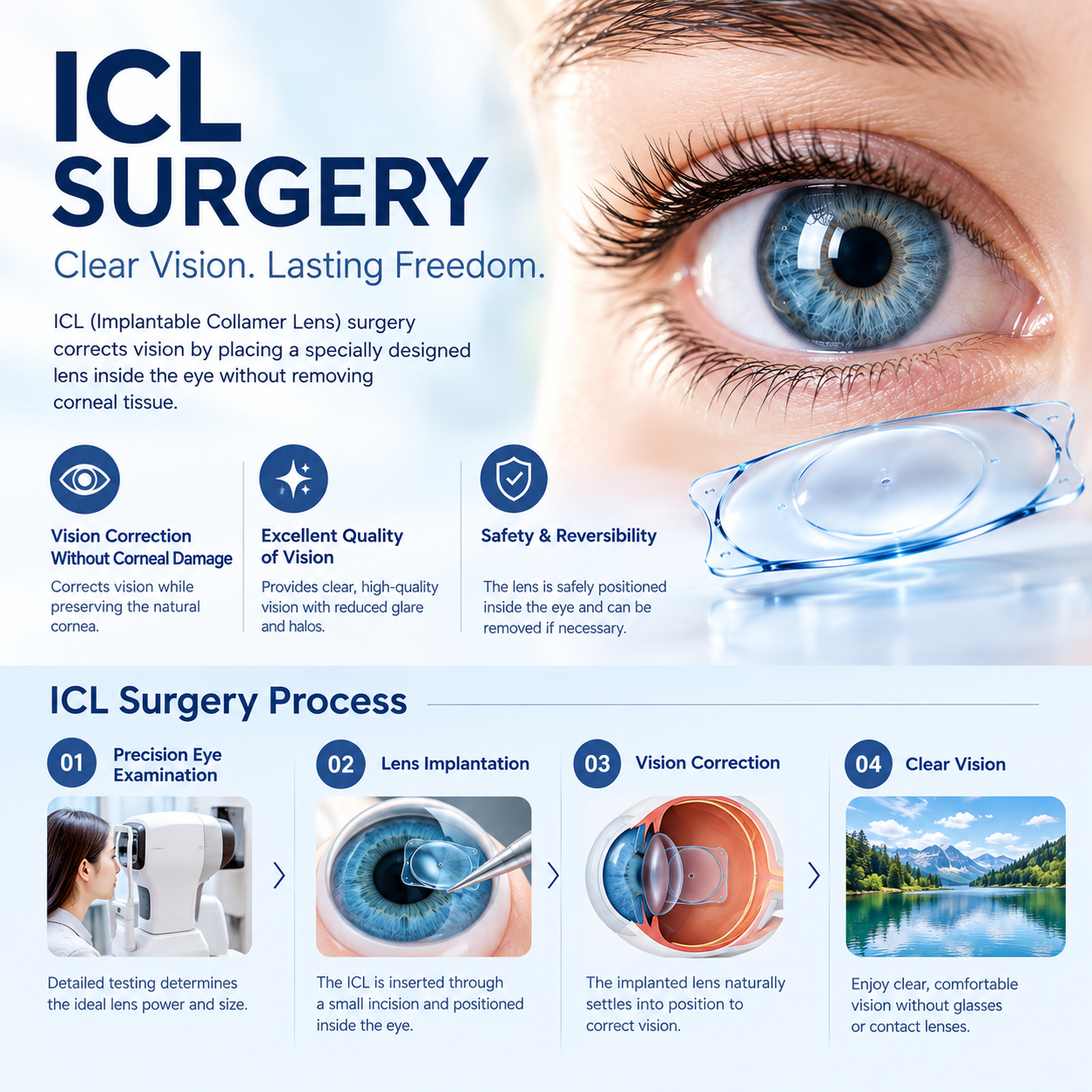
ICL corrects vision by placing an implantable lens behind the iris and in front of the natural crystalline lens. The natural lens remains intact, and the cornea is not reshaped.
LASIK creates a thin corneal flap and uses a laser to reshape the underlying corneal tissue. The flap is then repositioned.
LASEK is a surface laser procedure. The corneal epithelium is moved or removed, the underlying surface is reshaped with a laser, and a protective contact lens is placed during healing.
How Does ICL Work?
ICL stands for Implantable Collamer Lens. The lens is selected according to the patient’s prescription and internal eye measurements.
ICL may correct:
- Moderate or high myopia
- Myopia with astigmatism using toric ICL
- Prescriptions that may be less suitable for laser correction
Because ICL is placed inside the eye, candidacy requires sufficient internal eye space, an adequate endothelial cell count, a healthy natural lens, and suitable eye pressure.
How Does LASIK Work?
LASIK corrects refractive error by changing the shape of the cornea.
A thin flap is created on the corneal surface. The laser reshapes the tissue underneath, and the flap is repositioned without stitches.
LASIK is known for relatively rapid visual recovery, but sufficient corneal thickness and a suitable corneal shape are necessary.
How Does LASEK Work?
LASEK is a surface-based laser procedure that does not create the deeper corneal flap used in LASIK.
The outer epithelial layer is moved or removed, and the laser reshapes the corneal surface. A therapeutic contact lens is placed temporarily to protect the eye while the epithelium heals.
LASEK may be considered for patients with thinner corneas, active lifestyles, or concerns about a LASIK flap. Recovery is generally slower and more uncomfortable than LASIK recovery.
ICL vs LASIK
ICL and LASIK can both provide effective myopia correction, but their surgical methods and eligibility requirements differ.
ICL may be considered when:
- The prescription is relatively high
- The cornea is thin
- Preserving corneal tissue is important
- Dry-eye concerns affect laser eligibility
- The patient has sufficient internal eye space
- The natural lens and retina are healthy
LASIK may be considered when:
- The prescription is within the treatable laser range
- Corneal thickness and shape are suitable
- Rapid functional recovery is a priority
- The patient accepts the creation of a corneal flap
- There are no significant corneal or dry-eye concerns
ICL avoids corneal tissue removal but requires surgery inside the eye. LASIK avoids lens implantation but permanently reshapes the cornea.
ICL vs LASEK
ICL and LASEK may both be considered for patients who are not ideal LASIK candidates, but for different reasons.
ICL may be recommended for high myopia or when corneal tissue preservation is a priority. LASEK may be considered when the prescription remains within a suitable laser range but the cornea is too thin for a LASIK flap.
ICL generally offers faster early visual recovery than LASEK. However, ICL is an intraocular procedure with risks such as infection, eye-pressure changes, cataract formation, and lens-position problems.
LASEK does not place a lens inside the eye but involves surface healing, early discomfort, temporary blurry vision, and a longer stabilization period.
Which Procedure Is Better for High Myopia?
ICL is frequently considered for patients with moderate or high myopia, especially when laser correction would require removing a large amount of corneal tissue.
LASIK or LASEK may still be possible for some patients with higher prescriptions if the cornea is sufficiently thick and regular. However, treatment limits vary according to corneal measurements and the ophthalmologist’s assessment.
High-myopia patients also require careful retinal examinations regardless of which procedure they choose.
Which Procedure Is Better for Thin Corneas?
ICL may be considered for patients with thin corneas because it does not remove corneal tissue.
LASEK may also be an option for some patients with thinner corneas because it does not require a LASIK flap. However, laser reshaping still removes a calculated amount of corneal tissue.
Corneal thickness alone does not determine the best procedure. Corneal shape, prescription, internal eye anatomy, endothelial cell count, and overall eye health must also be evaluated.
Which Procedure Is Better for Dry Eyes?
ICL does not require extensive corneal reshaping and may be considered for patients with dry-eye concerns. Temporary dryness or irritation can still occur after surgery.
LASIK can affect corneal nerves involved in tear production and may temporarily worsen dry-eye symptoms. Patients with significant dry-eye disease may need treatment before LASIK is considered.
LASEK may have a different dry-eye profile from LASIK because it does not create a deep corneal flap, but temporary dryness remains possible.
The existing dry-eye condition should be diagnosed and managed before any vision correction procedure.
Which Procedure Has the Fastest Recovery?
LASIK often provides rapid functional visual recovery, with many patients noticing significant improvement within the first day.
ICL may also provide rapid visual improvement, although patients require monitoring for eye pressure, inflammation, and lens position.
LASEK generally has a slower early recovery because the corneal epithelium must heal. Blurry vision, discomfort, tearing, and light sensitivity may be more noticeable during the first several days.
Individual recovery varies and should not be guaranteed.
Which Procedure Is More Painful?
LASIK and ICL are generally associated with limited discomfort during the procedure because anesthetic eye drops are used.
LASEK may cause more discomfort during early recovery as the corneal surface heals. Patients may experience burning, tearing, light sensitivity, or a gritty sensation.
Pain tolerance and recovery experiences differ between patients.
ICL, LASIK, and LASEK Procedure Times
All three procedures are generally completed relatively quickly, but patients spend additional time at the eye center for preparation and postoperative monitoring.
ICL requires lens implantation through a small corneal incision.
LASIK requires flap creation, laser reshaping, and flap repositioning.
LASEK requires epithelial preparation, laser reshaping, and placement of a protective contact lens.
The exact procedure time depends on the treatment plan and whether one or both eyes are treated.
Does ICL Remove Corneal Tissue?
No. ICL does not remove or reshape corneal tissue to correct the prescription.
A small corneal incision is still required to insert the implantable lens.
Does LASIK or LASEK Remove Corneal Tissue?
Yes. Both procedures use a laser to remove a calculated amount of corneal tissue and permanently change the corneal shape.
LASIK performs the laser treatment beneath a corneal flap. LASEK performs the treatment closer to the corneal surface.
Is ICL Reversible?
ICL can potentially be removed or exchanged, making “removable” a more accurate description than completely reversible.
Lens removal requires another intraocular operation, and the eye cannot be guaranteed to return to exactly the same condition it was in before surgery.
LASIK and LASEK permanently reshape the cornea and cannot restore the removed tissue.
Can ICL, LASIK, or LASEK Correct Astigmatism?
All three procedures may correct astigmatism in eligible patients.
Toric ICL is designed to correct myopia with astigmatism. Accurate alignment is required, and lens rotation can reduce astigmatism correction.
LASIK and LASEK reshape the cornea according to the measured amount and axis of astigmatism.
The degree and stability of astigmatism influence treatment selection.
Which Procedure Provides Better Vision Quality?
All three procedures can provide good visual results in appropriately selected patients.
Visual quality depends on:
- Original prescription
- Degree of astigmatism
- Pupil size
- Corneal shape
- Retinal health
- Tear-film quality
- Accuracy of treatment planning
- Healing response
- Residual refractive error
No procedure can guarantee perfect vision or complete freedom from glasses.
Night Vision After ICL, LASIK, and LASEK
Glare, halos, starbursts, or reduced night-vision quality can occur after any refractive procedure.
These effects may be more noticeable during early recovery and can improve as the eyes heal and the brain adapts. Persistent symptoms may be related to pupil size, residual prescription, dry eye, optical changes, or lens positioning.
Patients who drive frequently at night should discuss their visual requirements during the consultation.
ICL Risks
Potential ICL risks include:
- Infection inside the eye
- Inflammation
- Increased eye pressure
- Incorrect lens size or position
- Toric lens rotation
- Residual refractive error
- Endothelial cell loss
- Cataract formation
- Retinal complications
- Need for lens repositioning, exchange, or removal
Because ICL is an intraocular procedure, long-term eye monitoring remains important.
LASIK Risks
Potential LASIK risks include:
- Dry-eye symptoms
- Flap-related complications
- Infection or inflammation
- Glare and halos
- Residual refractive error
- Overcorrection or undercorrection
- Corneal irregularity
- Corneal weakening or ectasia
- Need for enhancement treatment
Careful corneal screening helps identify patients who may have an increased risk.
LASEK Risks
Potential LASEK risks include:
- Early pain or discomfort
- Delayed epithelial healing
- Infection or inflammation
- Corneal haze
- Glare and halos
- Residual refractive error
- Overcorrection or undercorrection
- Temporary light sensitivity
- Longer visual stabilization
- Need for enhancement treatment
Following the prescribed eye-drop schedule is particularly important during surface healing.
ICL vs LASIK and LASEK Cost
ICL generally costs more than LASIK or LASEK because it requires customized implantable lenses and surgery inside the eye.
The final cost can depend on:
- Standard or toric ICL
- Prescription complexity
- Diagnostic examinations
- Treatment of one or both eyes
- Surgical technique
- Medication
- Follow-up services
- Additional treatment requirements
Price should not determine the procedure. A less expensive treatment is not appropriate if the patient’s eyes do not meet its safety requirements.
Can I Have ICL After LASIK or LASEK?
Some patients with residual refractive error after previous laser surgery may be considered for ICL. However, eligibility depends on the remaining prescription, internal eye anatomy, endothelial cell count, and overall eye health.
Previous surgery records should be provided when available. Additional testing may be necessary.
Can I Have Laser Correction After ICL?
A laser enhancement may be considered in selected cases when a small residual prescription remains after ICL surgery.
The cornea must meet the relevant safety requirements. The ophthalmologist will determine whether observation, glasses, lens repositioning, lens exchange, or laser enhancement is most appropriate.
Which Procedure Is Best for Athletes?
The answer depends on the type of sport and the patient’s eye condition.
Patients participating in contact sports may want to avoid concerns associated with a LASIK flap. LASEK does not create a deep flap, while ICL does not reshape the cornea.
However, direct eye trauma may still be dangerous after any eye surgery. Athletes should discuss their specific activities and return-to-sport requirements with the ophthalmologist.
Which Procedure Is Best for International Patients?
International patients often consider recovery speed, the required number of follow-up visits, and how long they need to remain in Seoul.
LASIK may offer fast initial recovery.
ICL may also provide rapid visual improvement but requires careful postoperative monitoring of eye pressure and lens position.
LASEK generally requires a longer early recovery and may involve removal of the protective contact lens several days after surgery.
Travel plans should be arranged only after the individual procedure and follow-up schedule are confirmed.
How Does B&VIIT Eye Center Choose the Right Procedure?
B&VIIT Eye Center Gangnam evaluates the entire eye rather than recommending a procedure based only on prescription strength.
Testing may include:
- Visual acuity and refraction
- Corneal thickness measurement
- Corneal topography
- Anterior chamber depth measurement
- Endothelial cell count
- Eye-pressure testing
- Pupil size assessment
- Dry-eye evaluation
- Natural lens examination
- Dilated retinal examination
- Astigmatism measurement
- ICL lens calculations
The results help determine whether ICL, LASIK, LASEK, or another vision correction option may be suitable.
ICL May Be Better When
ICL may be considered when:
- Myopia is moderate or high
- The cornea is too thin for the recommended laser correction
- Preserving corneal tissue is a priority
- Dry-eye concerns limit laser eligibility
- The patient has sufficient internal eye space
- The natural lens remains healthy
- The endothelial cell count is adequate
LASIK May Be Better When
LASIK may be considered when:
- The prescription is within an appropriate laser range
- The cornea is sufficiently thick and regular
- Rapid visual recovery is important
- Dry-eye symptoms are controlled
- The patient accepts flap-related considerations
- There are no significant corneal risk factors
LASEK May Be Better When
LASEK may be considered when:
- The prescription is suitable for surface laser correction
- A LASIK flap is not preferred
- The cornea is thinner but still suitable for laser treatment
- The patient participates in activities with possible eye impact
- The patient accepts a slower and less comfortable early recovery
Why Choose B&VIIT Eye Center Gangnam?
B&VIIT Eye Center in Gangnam provides personalized comparison and planning for patients considering ICL, LASIK, or LASEK in Seoul.
The process may include:
- Comprehensive vision correction testing
- High-myopia evaluation
- Corneal safety assessment
- Dry-eye examination
- ICL candidacy testing
- Retinal evaluation
- Personalized procedure comparison
- Postoperative monitoring
- Travel guidance for international patients
Book a Vision Correction Consultation in Gangnam
The best way to compare ICL, LASIK, and LASEK is through a comprehensive eye examination.
International patients can prepare their current prescription, contact-lens history, previous eye examination results, medical information, and preferred travel dates before contacting B&VIIT Eye Center Gangnam.
Frequently Asked Questions
Is ICL better than LASIK?
ICL is not universally better. It may be more appropriate for certain patients with high myopia, thin corneas, or dry-eye concerns. LASIK may be suitable for patients with healthy, sufficiently thick corneas and an appropriate prescription.
Is ICL safer than LASEK?
The procedures have different risks. ICL avoids corneal tissue removal but involves surgery inside the eye. LASEK does not implant a lens but requires corneal surface healing.
Which procedure has the fastest recovery?
LASIK often provides the fastest functional recovery. ICL can also provide rapid improvement, while LASEK generally requires a longer early healing period.
Which procedure is best for high myopia?
ICL is frequently considered for high myopia, particularly when laser correction would require excessive corneal tissue removal. Final suitability requires detailed testing.
Which procedure is best for thin corneas?
ICL may be appropriate because it preserves corneal tissue. LASEK may also be possible for some patients, depending on corneal thickness, shape, and prescription.
Which procedure causes less dry eye?
ICL may have a different dry-eye profile because it does not require extensive corneal reshaping. Temporary dryness can still occur after any procedure.
Can ICL be removed?
The implanted lens can potentially be removed or exchanged, but this requires another intraocular operation.
Which procedure costs more?
ICL generally costs more because the treatment requires customized implantable lenses and intraocular surgery.
Can I choose my preferred procedure?
Patient preference is considered, but the final recommendation should be guided by eye measurements, safety requirements, and the ophthalmologist’s assessment.