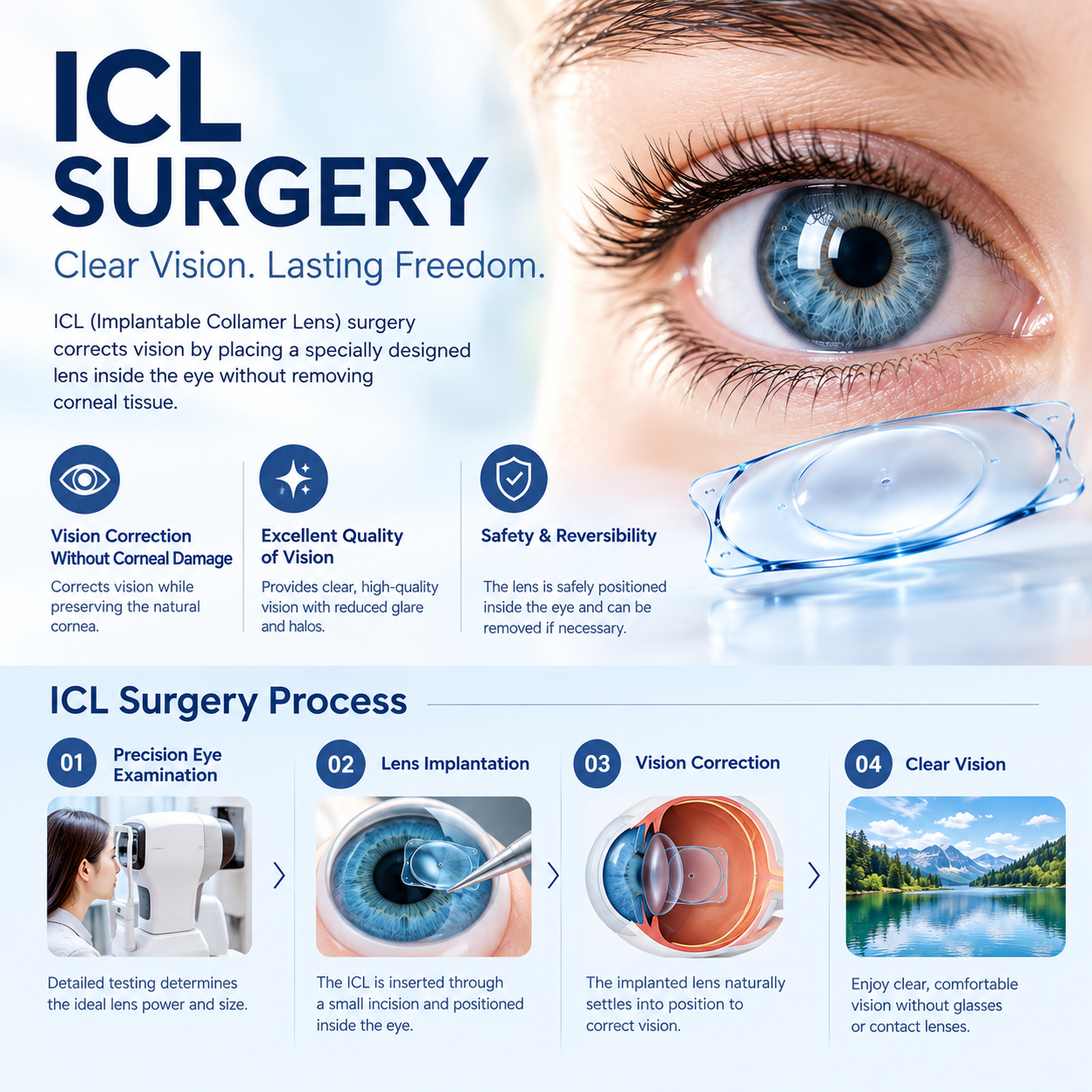
ICL Recovery in Korea
at B&VIIT Eye Center Gangnam, Seoul
ICL recovery is generally relatively quick, with many patients noticing clearer vision within the first day after surgery. Temporary blurriness, glare, halos, light sensitivity, or mild irritation may occur while the eyes heal. International patients should remain in Seoul long enough to complete postoperative examinations of their vision, eye pressure, inflammation, and ICL position before flying home.
What Happens Immediately After ICL Surgery?
After ICL implantation, patients rest at the eye center before receiving an initial postoperative examination.
The medical team may check:
- Visual response
- Eye pressure
- ICL position
- Corneal condition
- Signs of inflammation
- General comfort
Vision may initially appear blurry or hazy. Patients may also notice bright lights, glare, watering, or a mild foreign-body sensation.
Patients should not drive after surgery and should arrange transportation back to their hotel or accommodation in Seoul.
How Long Does ICL Recovery Take?
Many patients experience meaningful vision improvement within 24 hours. Functional recovery may occur within several days, but complete healing and visual stabilization can take longer.
Recovery time depends on:
- Original prescription
- Degree of astigmatism
- Standard or toric ICL
- Lens position
- Eye-pressure response
- Pre-existing dry eye
- Retinal and overall eye health
- Individual healing response
- Compliance with medication and aftercare
Recovery should be evaluated through postoperative examinations rather than symptoms alone.
ICL Recovery on the Day of Surgery
Patients should rest for the remainder of the day and avoid unnecessary visual strain.
Common early experiences may include:
- Blurry or fluctuating vision
- Light sensitivity
- Watery eyes
- Mild irritation
- Glare around lights
- A gritty sensation
- Temporary difficulty focusing
Patients should use prescribed medication as instructed and avoid touching or rubbing their eyes.
The First Day After ICL Surgery
A follow-up examination may be scheduled on or around the first day after surgery.
The ophthalmologist may evaluate:
- Uncorrected vision
- Eye pressure
- Inflammation
- Corneal clarity
- ICL position
- The space between the ICL and natural lens
- Toric lens alignment, when applicable
Many patients notice significantly clearer vision by this stage, although visual fluctuation may continue.
The First Week of ICL Recovery
Vision often becomes clearer and more stable during the first week. Temporary glare, halos, dryness, or light sensitivity may remain, particularly at night.
Patients should generally avoid:
- Rubbing the eyes
- Eye makeup
- Swimming
- Saunas and steam rooms
- Strenuous exercise
- Heavy lifting
- Dusty environments
- Contact sports
- Getting water directly into the eyes
Specific restrictions depend on the ophthalmologist’s instructions.
The First Month After ICL Surgery
Most patients gradually return to their normal routine as healing progresses. The ophthalmologist may allow the patient to resume exercise, swimming, cosmetics, and other activities after confirming that recovery is stable.
Visual symptoms such as glare or halos may continue to improve during this period. Follow-up examinations remain important even if vision feels clear.
When Does Vision Stabilize After ICL?
Many patients achieve useful vision quickly, but final stabilization varies.
Temporary fluctuations may be influenced by:
- Healing of the small corneal incision
- Dryness
- Inflammation
- Eye-pressure changes
- Adjustment to the implanted lens
- Residual refractive error
- Differences in healing between the eyes
Patients should contact the eye center if vision worsens rather than gradually improves.
Is Blurry Vision Normal After ICL?
Temporary blurry or hazy vision can occur immediately after ICL surgery. It may result from pupil dilation, corneal swelling, medication, dryness, or the normal healing response.
Sudden, severe, or progressively worsening blurriness should be reported promptly.
Are Glare and Halos Normal During Recovery?
Glare, halos, starbursts, and light sensitivity may occur during early recovery, particularly at night.
These symptoms may become less noticeable as the eyes heal and the brain adapts. Persistent symptoms may require evaluation for dry eye, residual refractive error, pupil-related effects, lens positioning, or other causes.
Does ICL Recovery Cause Dry Eyes?
Temporary dryness, irritation, or a gritty sensation may occur after ICL surgery. Possible causes include the incision, medication, reduced blinking, screen use, or existing dry-eye disease.
Lubricating eye drops may be recommended. Patients should use only products approved by their ophthalmologist.
Is ICL Recovery Painful?
Most patients experience mild discomfort rather than significant pain. Watering, light sensitivity, pressure, or a foreign-body sensation may occur during early recovery.
Severe or increasing eye pain is not a routine recovery symptom and requires immediate medical attention.
How to Use Eye Drops After ICL Surgery
Patients may receive antibiotic, anti-inflammatory, and lubricating eye drops.
For safe use:
- Wash your hands first
- Avoid touching the bottle tip
- Apply the correct number of drops
- Wait between different medications when instructed
- Follow the prescribed schedule
- Do not stop medication early without approval
- Keep the medication clean and properly stored
International patients should ensure they have enough medication for their stay in Korea and return journey.
Can I Use My Phone or Computer After ICL?
Short periods of screen use may be possible if the eyes feel comfortable. Extended phone or computer use can increase dryness and fatigue.
Patients should:
- Take frequent visual breaks
- Blink regularly
- Reduce screen brightness when necessary
- Avoid using screens in a dark room
- Use prescribed lubricating drops
- Stop and rest if symptoms increase
Screen use does not usually damage the implanted lens, but comfort should guide activity during early recovery.
When Can I Return to Work?
Some patients return to office-based work within a few days. The appropriate timing depends on visual comfort and job requirements.
Additional recovery time may be needed for work involving:
- Heavy physical activity
- Dust or chemicals
- Night driving
- Prolonged screen use
- Construction environments
- Water exposure
- Risk of eye impact
Patients should follow the return-to-work guidance provided during their postoperative examination.
When Can I Drive After ICL?
Patients should not drive on the day of surgery.
Driving may resume after the ophthalmologist confirms that vision is sufficiently clear and stable. Patients experiencing glare, halos, light sensitivity, or poor night vision should avoid driving until these symptoms have been evaluated.
When Can I Shower and Wash My Hair?
Patients may be allowed to shower after surgery, but water, shampoo, soap, and facial cleansers should not enter the eyes during early recovery.
The exact timeline for washing the face and hair varies. Patients should follow the instructions provided by B&VIIT Eye Center Gangnam.
When Can I Wear Eye Makeup?
Eye makeup should be avoided during the initial healing period. Mascara, eyeliner, false eyelashes, eyelash extensions, and makeup tools can irritate the eyes or introduce contamination.
Patients should replace old eye makeup when advised and wait for medical approval before resuming its use.
When Can I Exercise After ICL?
Light walking may be possible relatively soon. Strenuous exercise, heavy lifting, swimming, saunas, and contact sports should be avoided until approved.
Patients involved in martial arts, boxing, ball sports, or other activities with a risk of eye impact may require a longer restriction period and protective eyewear.
When Can I Swim After ICL Surgery?
Swimming pools, oceans, hot tubs, and saunas should be avoided during early recovery because water exposure may increase the risk of irritation or infection.
The ophthalmologist will determine when swimming can safely resume.
When Can I Fly After ICL Surgery?
International patients may be able to fly after the ophthalmologist confirms that their eyes are stable.
Before leaving Korea, patients should complete the recommended checks for:
- Vision
- Eye pressure
- Inflammation
- Corneal condition
- ICL position
- Toric lens alignment
Cabin air can be dry. Patients may be advised to carry approved lubricating drops, avoid rubbing their eyes, stay hydrated, and continue their medication schedule during the flight.
How Long Should I Stay in Korea After ICL?
The recommended stay depends on the examination results, surgery schedule, lens availability, and recovery.
International patients should allow sufficient time for:
- Comprehensive preoperative testing
- ICL surgery
- The first postoperative examination
- Additional eye-pressure checks
- Lens-position monitoring
- Recovery assessment
- Medical guidance before flying
Patients should confirm their personalized schedule before purchasing non-refundable flights.
Where Should I Stay During Recovery in Seoul?
Accommodation near B&VIIT Eye Center in Gangnam can make follow-up visits more convenient.
Patients may want to choose a hotel or serviced residence with:
- Easy taxi or subway access
- A quiet environment
- Air conditioning and adjustable lighting
- Nearby pharmacies and restaurants
- Flexible booking conditions
- A short travel time to the eye center
Patients may be sensitive to bright outdoor light and should bring sunglasses.
What Should I Pack for ICL Surgery in Korea?
Useful items may include:
- Prescription and eye records
- Current glasses
- Sunglasses
- Comfortable clothing
- Travel-size hand sanitizer
- Medication list
- Health and travel insurance information
- Phone charger
- Flexible flight documentation
- A companion’s contact information
Patients should bring glasses even if they expect not to need them after surgery.
Warning Signs During ICL Recovery
Patients should contact the eye center immediately if they experience:
- Severe or increasing eye pain
- Sudden vision loss
- Rapidly worsening vision
- Significant redness or swelling
- Persistent nausea with eye pain
- Unusual discharge
- Rapidly increasing light sensitivity
- New flashes or numerous floaters
- A curtain-like shadow in the visual field
These symptoms should not be delayed until the next scheduled appointment.
Long-Term Care After Returning Home
ICL is designed for long-term vision correction, but regular eye examinations remain necessary.
Long-term monitoring may include:
- Vision and prescription checks
- Eye-pressure measurement
- Endothelial cell count
- ICL position
- Natural lens examination
- Cataract screening
- Retinal examinations
- Evaluation of new visual symptoms
ICL corrects refractive error but does not prevent presbyopia, cataracts, retinal disease, or future prescription changes.
Why Choose B&VIIT Eye Center Gangnam?
B&VIIT Eye Center Gangnam provides structured ICL recovery monitoring for local and international patients undergoing vision correction in Seoul.
Care may include:
- Postoperative vision testing
- Eye-pressure monitoring
- Inflammation assessment
- ICL position checks
- Toric ICL alignment checks
- Medication guidance
- Recovery instructions
- Flight and travel planning
- Long-term follow-up recommendations
Plan Your ICL Recovery in Korea
International patients should plan their treatment and recovery schedule before traveling to Seoul.
Providing B&VIIT Eye Center with your current prescription, contact-lens history, previous eye records, medical information, and travel dates can support preliminary planning. Final candidacy and recovery guidance are confirmed after an in-person examination.
Frequently Asked Questions
How long does ICL recovery take?
Many patients notice clearer vision within the first day and return to routine activities within several days. Complete healing and stabilization vary between patients.
Is blurry vision normal after ICL?
Temporary blurry or fluctuating vision can occur during early recovery. Sudden or worsening visual loss requires prompt medical attention.
How many days should I stay in Korea after ICL?
The required stay depends on the surgery schedule and recovery. Patients should remain long enough to complete all recommended early postoperative examinations.
Can I fly after ICL surgery?
Flying may be possible after the ophthalmologist confirms that vision, eye pressure, inflammation, and lens position are stable.
When can I return to work?
Some patients return to office work within a few days. Physical, dusty, or visually demanding jobs may require additional recovery time.
When can I exercise after ICL?
Light activity may resume relatively soon, but strenuous exercise, swimming, and contact sports should wait until medical approval is given.
Are glare and halos normal after ICL?
They can occur during early recovery, especially at night. Persistent or severe symptoms should be evaluated.
Do I need follow-up care after returning home?
Yes. Regular eye examinations are important for monitoring eye pressure, endothelial cells, the natural lens, retina, and ICL position.