Best ICL Surgeons in Korea
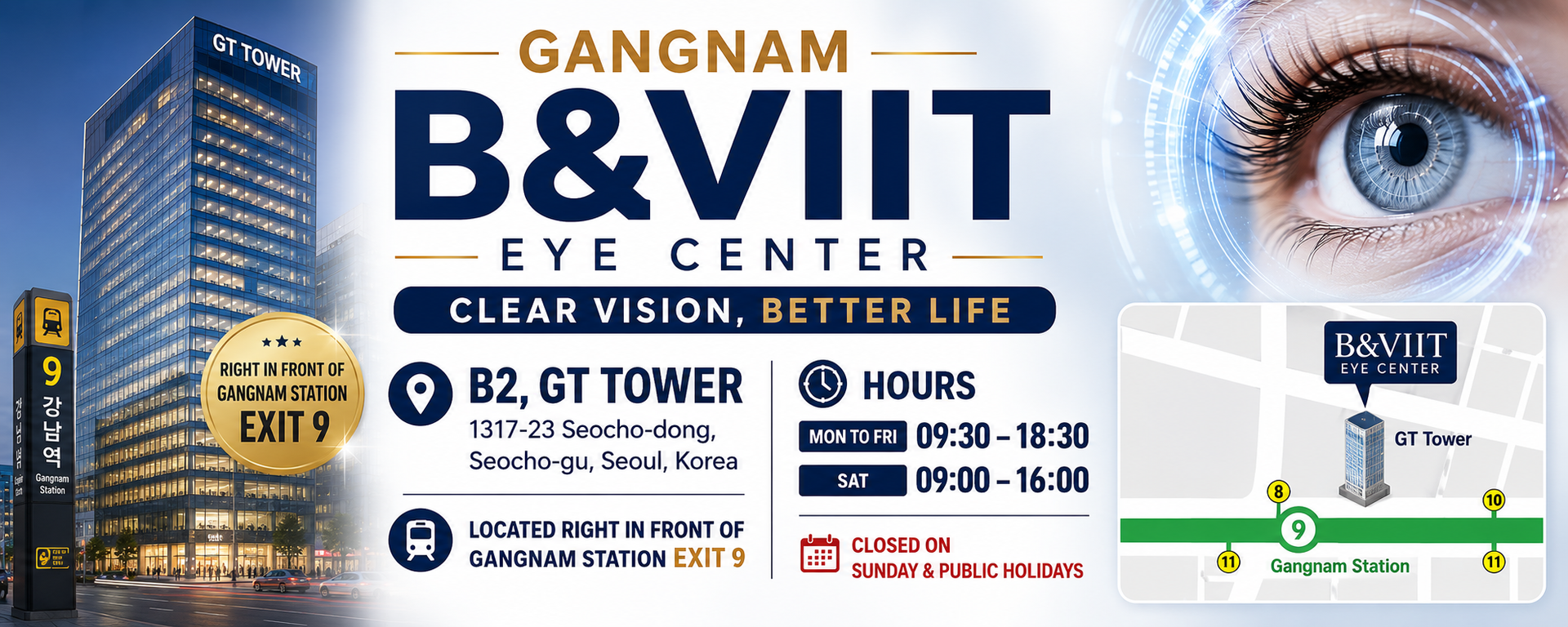
at B&VIIT Eye Center Gangnam, Seoul
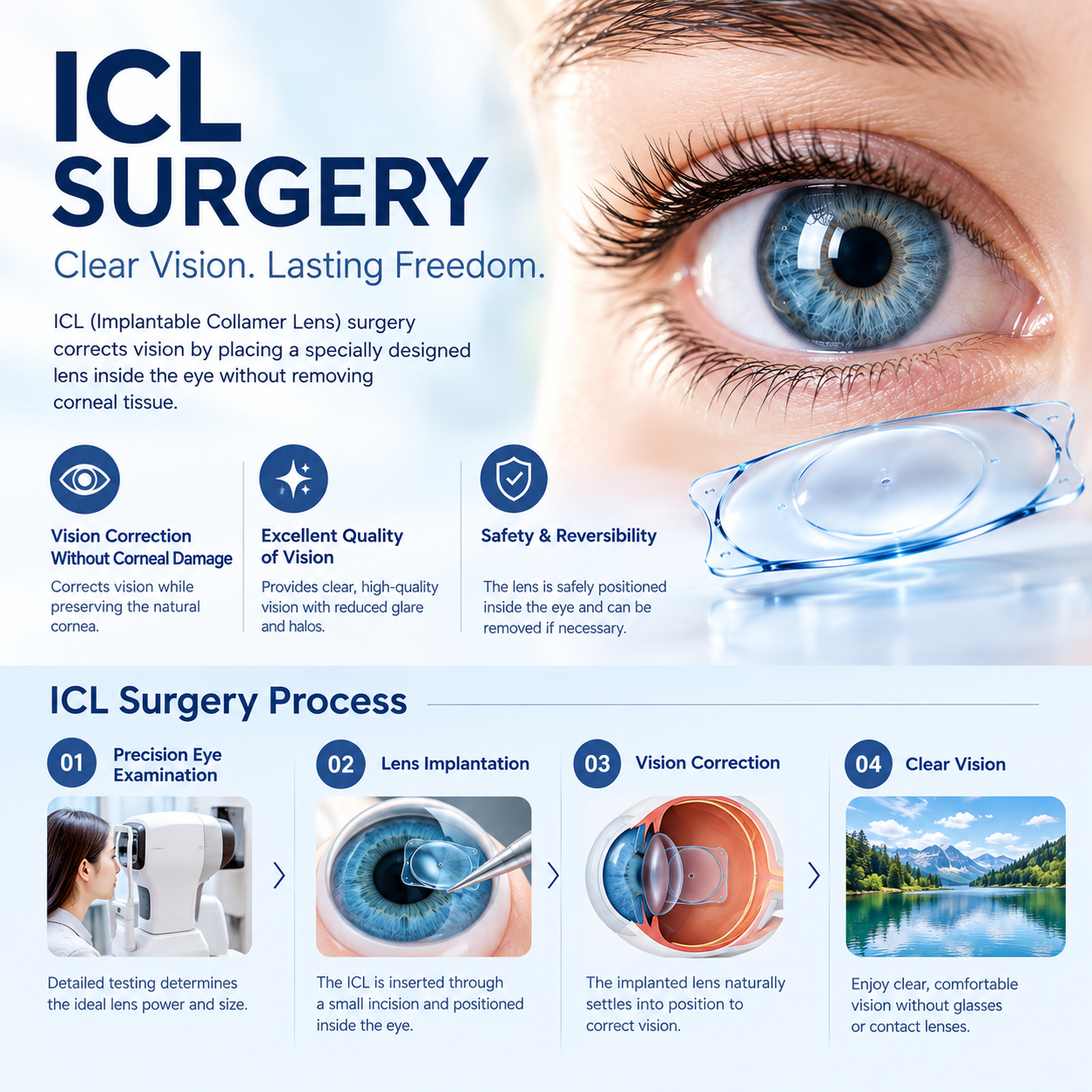
The best ICL surgeon for an individual patient is an ophthalmologist who combines detailed candidacy testing, accurate lens calculations, careful surgical technique, and structured postoperative monitoring. ICL outcomes depend not only on the operation but also on selecting the correct patient, lens power, lens size, and toric alignment when astigmatism is present. At B&VIIT Eye Center Gangnam, each treatment plan is based on comprehensive eye measurements and the patient’s individual visual needs.
How Do You Find the Best ICL Surgeon in Korea?
Choosing an ICL surgeon should involve more than comparing advertisements, prices, or patient-review scores.
Important factors include:
- Experience evaluating ICL candidates
- Familiarity with moderate and high myopia
- Experience with standard and toric ICL
- Access to comprehensive diagnostic equipment
- Accurate lens power and size calculations
- Careful examination of the retina and natural lens
- Clear explanation of alternatives and risks
- Structured postoperative monitoring
- Ability to manage unexpected findings
- Long-term follow-up recommendations
The most appropriate surgeon should be willing to recommend another procedure—or no surgery—when ICL is not suitable.
Why Surgeon Selection Matters for ICL
ICL is performed inside the eye. Unlike glasses or contact lenses, it requires an implanted lens to be positioned behind the iris and in front of the natural lens.
The surgeon must consider:
- Whether the patient is a suitable candidate
- Which ICL model is appropriate
- The correct lens power
- The correct lens size
- Available space inside the eye
- The expected position of the lens
- Astigmatism correction and toric alignment
- Eye-pressure response
- Endothelial cell health
- Retinal and natural lens condition
Accurate planning is essential for both vision correction and long-term eye health.
Look for Comprehensive ICL Candidacy Testing
An experienced ICL surgeon should not determine eligibility from a glasses prescription alone.
A comprehensive assessment may include:
- Visual acuity testing
- Manifest and cycloplegic refraction
- Corneal thickness measurement
- Corneal topography
- Anterior chamber depth measurement
- Endothelial cell count
- Eye-pressure testing
- Pupil size measurement
- Natural lens examination
- Dilated retinal examination
- Dry-eye assessment
- Astigmatism evaluation
- Lens power and size calculation
Additional testing may be required for patients with high myopia, previous eye surgery, glaucoma concerns, retinal conditions, or other medical issues.
Choose a Surgeon Experienced With High Myopia
Many patients considering ICL have moderate or high myopia. High-myopia treatment requires more than correcting a strong prescription.
The surgeon should also evaluate for:
- Retinal thinning
- Retinal holes or tears
- Increased risk of retinal detachment
- Myopic changes affecting central vision
- Abnormal eye length
- Existing visual limitations
- Long-term retinal monitoring needs
ICL can correct refractive error, but it does not eliminate the retinal risks associated with high myopia.
Choose a Surgeon Experienced With Toric ICL
Patients with myopia and astigmatism may require toric ICL.
Toric lens planning involves:
- Measuring the amount of astigmatism
- Identifying its axis
- Confirming prescription stability
- Calculating the appropriate lens power
- Planning the rotational position
- Checking alignment after surgery
- Monitoring for lens rotation
If a toric ICL rotates away from its intended position, astigmatism correction may decrease. Significant rotation may require lens repositioning.
Why ICL Lens Sizing Is Important
ICL is not a one-size-fits-all procedure. The ophthalmologist selects the lens size according to detailed internal eye measurements.
An unsuitable lens size may affect:
- The distance between the ICL and natural lens
- Eye-pressure control
- Fluid circulation
- ICL stability
- Toric lens alignment
- Contact with nearby eye structures
- Long-term safety
A qualified ICL surgeon should explain how the measurements guide lens selection.
Why the ICL Vault Matters
The vault refers to the space between the implanted ICL and the natural crystalline lens.
A vault that is too low may increase contact-related concerns involving the natural lens. A vault that is too high may affect the iris, fluid circulation, or eye pressure.
The surgeon should evaluate the expected vault during planning and monitor the actual lens position after surgery.
Why Endothelial Cell Testing Matters
Corneal endothelial cells help keep the cornea clear. These cells have a limited ability to regenerate.
Before recommending ICL, the surgeon should confirm that the patient has an adequate endothelial cell density. Long-term examinations may also be recommended to monitor changes.
Patients with insufficient endothelial cells may not be suitable for ICL surgery.
Why Retinal Examination Matters Before ICL
Patients with high myopia may have retinal thinning, holes, tears, or other changes that are not detected through a routine prescription test.
A dilated retinal examination can help identify conditions that may require treatment, monitoring, or a change in the surgical schedule.
The best ICL planning considers the entire eye—not only the prescription.
A Good ICL Surgeon Compares Alternative Procedures
A responsible surgeon should explain whether ICL, LASIK, LASEK, SMILE, or continued use of glasses and contact lenses may be more appropriate.
ICL may be considered when:
- Myopia is moderate or high
- The cornea is thin
- Preserving corneal tissue is preferred
- Dry-eye concerns affect laser eligibility
- Internal eye anatomy is suitable
Laser vision correction may be more appropriate for other patients. The recommendation should follow diagnostic testing rather than a predetermined procedure choice.
A Good Surgeon Explains ICL Risks Clearly
Every surgical procedure has limitations and potential complications. A trustworthy consultation should include a clear discussion of risks such as:
- Infection
- Inflammation
- Increased eye pressure
- Incorrect lens size or position
- Toric lens rotation
- Residual refractive error
- Endothelial cell loss
- Cataract formation
- Retinal complications
- Need for lens repositioning, exchange, or removal
- Additional surgery
A surgeon should not guarantee perfect vision or claim that ICL is risk-free.
Questions to Ask an ICL Surgeon
Patients can ask:
- Why am I a suitable ICL candidate?
- Are my corneas suitable for laser vision correction?
- Do I need standard or toric ICL?
- How will my lens power and size be calculated?
- Is my anterior chamber deep enough?
- Is my endothelial cell count adequate?
- Is my retina healthy?
- What visual result is realistic?
- What are my individual risk factors?
- How will my eye pressure be monitored?
- What happens if the lens rotates?
- What happens if the lens size is unsuitable?
- Could I still need glasses?
- How many follow-up visits will I need?
- What long-term examinations are recommended?
Clear answers help patients make an informed decision.
Should You Choose an ICL Surgeon Based on Reviews?
Patient reviews can provide insight into communication, comfort, scheduling, recovery, and postoperative support.
However, reviews cannot confirm:
- Clinical competence
- Your individual candidacy
- Accuracy of lens calculations
- Infection-control standards
- Risk-management ability
- Your likely visual outcome
Reviews should be considered alongside medical qualifications, examination quality, treatment transparency, and follow-up care.
Should You Choose the Cheapest ICL Surgeon?
The lowest price does not necessarily represent the best value or safest treatment plan.
An ICL quotation should be reviewed for:
- Lens model
- Standard or toric correction
- Treatment of one or both eyes
- Preoperative diagnostic testing
- Surgeon and operating-room fees
- Postoperative medication
- Follow-up examinations
- Policies for repositioning or additional procedures
- International patient assistance
Cost is important, but it should be considered after confirming medical suitability and the completeness of care.
What Should International Patients Look For?
International patients require both surgical care and a realistic medical travel plan.
Important considerations include:
- Communication before arrival
- Clear instructions for stopping contact lenses
- Sufficient time for comprehensive testing
- Confirmation of lens availability
- Transparent treatment quotations
- Postoperative appointments in Seoul
- Guidance about flying home
- Access to medical records
- Long-term follow-up instructions
- Emergency contact information
Patients should avoid booking a departure immediately after surgery.
How Long Should You Stay in Seoul?
The recommended stay depends on lens availability, examination results, surgery scheduling, and recovery.
International patients should allow time for:
- ICL candidacy testing
- Lens selection and confirmation
- Surgery
- First-day postoperative examination
- Additional eye-pressure checks
- Lens-position monitoring
- Recovery assessment
- Clearance before flying
The individual schedule should be confirmed before purchasing non-refundable flights.
Why Choose an ICL Surgeon in Gangnam?
Gangnam is a major medical district in Seoul with convenient access to eye centers, diagnostic services, pharmacies, hotels, serviced residences, restaurants, taxis, and public transportation.
Staying close to the eye center can make it easier to:
- Attend early follow-up appointments
- Return for additional testing
- Collect prescribed medication
- Rest after surgery
- Receive prompt assessment if symptoms occur
- Complete medical checks before leaving Korea
Convenience should support—not replace—the evaluation of clinical care.
ICL Surgeons at B&VIIT Eye Center Gangnam
B&VIIT Eye Center Gangnam provides individualized vision correction planning based on comprehensive testing.
The ICL treatment process may include:
- Detailed candidacy evaluation
- High-myopia assessment
- Standard and toric ICL planning
- Personalized lens power and size calculations
- Corneal and internal eye measurements
- Endothelial cell testing
- Retinal examination
- Eye-pressure monitoring
- Postoperative lens-position checks
- Long-term follow-up guidance
The recommended procedure is determined by the patient’s examination results and individual visual needs.
Why Choose B&VIIT Eye Center for ICL?
Patients considering ICL surgery in Korea can receive testing, consultation, surgery, and postoperative monitoring at one eye center in Gangnam.
B&VIIT Eye Center offers:
- Comprehensive vision correction examinations
- Evaluation for moderate and high myopia
- Toric ICL assessment for astigmatism
- Comparison with LASIK, LASEK, and SMILE
- Personalized ICL planning
- Structured postoperative care
- Support for international patients visiting Seoul
Book an ICL Surgeon Consultation in Korea
The best ICL surgeon for you can only recommend treatment after examining your eyes.
International patients can prepare:
- Current glasses prescription
- Contact-lens prescription and type
- Previous eye examination results
- History of eye surgery or disease
- Current medications
- Relevant medical conditions
- Preferred travel dates
- Questions about surgery and recovery
Preliminary information may support planning, but final candidacy requires comprehensive in-person testing at B&VIIT Eye Center Gangnam.
Frequently Asked Questions
Who is the best ICL surgeon in Korea?
There is no single surgeon who is best for every patient. The right surgeon should provide comprehensive testing, accurate lens planning, transparent risk counseling, careful surgery, and structured follow-up.
What qualifications should an ICL surgeon have?
Patients should look for an ophthalmologist experienced in refractive and intraocular procedures, including ICL candidacy assessment, lens calculations, implantation, and complication management.
Does ICL experience with high myopia matter?
Yes. High-myopia patients require both refractive correction planning and careful retinal evaluation.
Why is toric ICL experience important?
Toric ICL requires accurate astigmatism measurements and rotational alignment. Postoperative monitoring is necessary to identify significant lens rotation.
Should I choose an ICL surgeon based on price?
Price should not be the primary consideration. Compare the quality of testing, lens selection, surgical planning, follow-up care, and management of potential complications.
Can patient reviews identify the best ICL surgeon?
Reviews may describe the patient experience, but they cannot prove clinical quality or predict your result. Medical testing and a transparent consultation are more important.
Can an ICL surgeon guarantee perfect vision?
No. Outcomes vary, and some patients may retain a residual prescription or require glasses for certain activities.
Can I consult an ICL surgeon before traveling to Korea?
Medical records may support a preliminary review, but final candidacy and lens selection require an in-person comprehensive eye examination.